Interviews ·
7 min read


Ten weeks. That is how long our Venture Program runs, and it is intense from day one. Workshops, mentor sessions, expert deep dives, pitch training, and more Miro boards than anyone would like to admit. Eight ventures from seven countries came into our summer Cohort #7, all of them building something real for forests, soil and biodiversity.
It ended with first, an online pitch event, opened up to the whole Brainforest ecosystem, where our community gets to meet the founders and see what ten weeks of work has produced. Then the offline Pitch Day in Zürich, in the room, in front of our jury, investors and partners.
Fredric came to Zürich for that final pitch. And he did not come empty-handed.
Somewhere in the middle of the evening, a container of black soldier fly larvae started making its way around the room. It is one thing to hear a founder talk about turning food waste into fertilizer, and quite another to hold the actual creatures doing the work in your hands. That moment told you everything about how this team operates.

Jury at Pitch Event in Zürich examining the larvae
What impressed us was not only the presentation, although it was excellent. It was how much Z Bio had already built before they ever walked into our program. They were not pitching a plan, they were reporting from the field.
After the Pitch event, our Investment Committee decided to make our first investment in Z Bio, and we could not be happier about it.
In short, here is what Z Bio does.
They take organic waste, the food waste that would otherwise rot in a landfill, and use black soldier fly larvae to convert it into two things Indonesian farmers use every single day: a biofertilizer that helps crops fight off disease, and an affordable animal feed. Insects do the heavy lifting. Waste becomes an input instead of a problem.
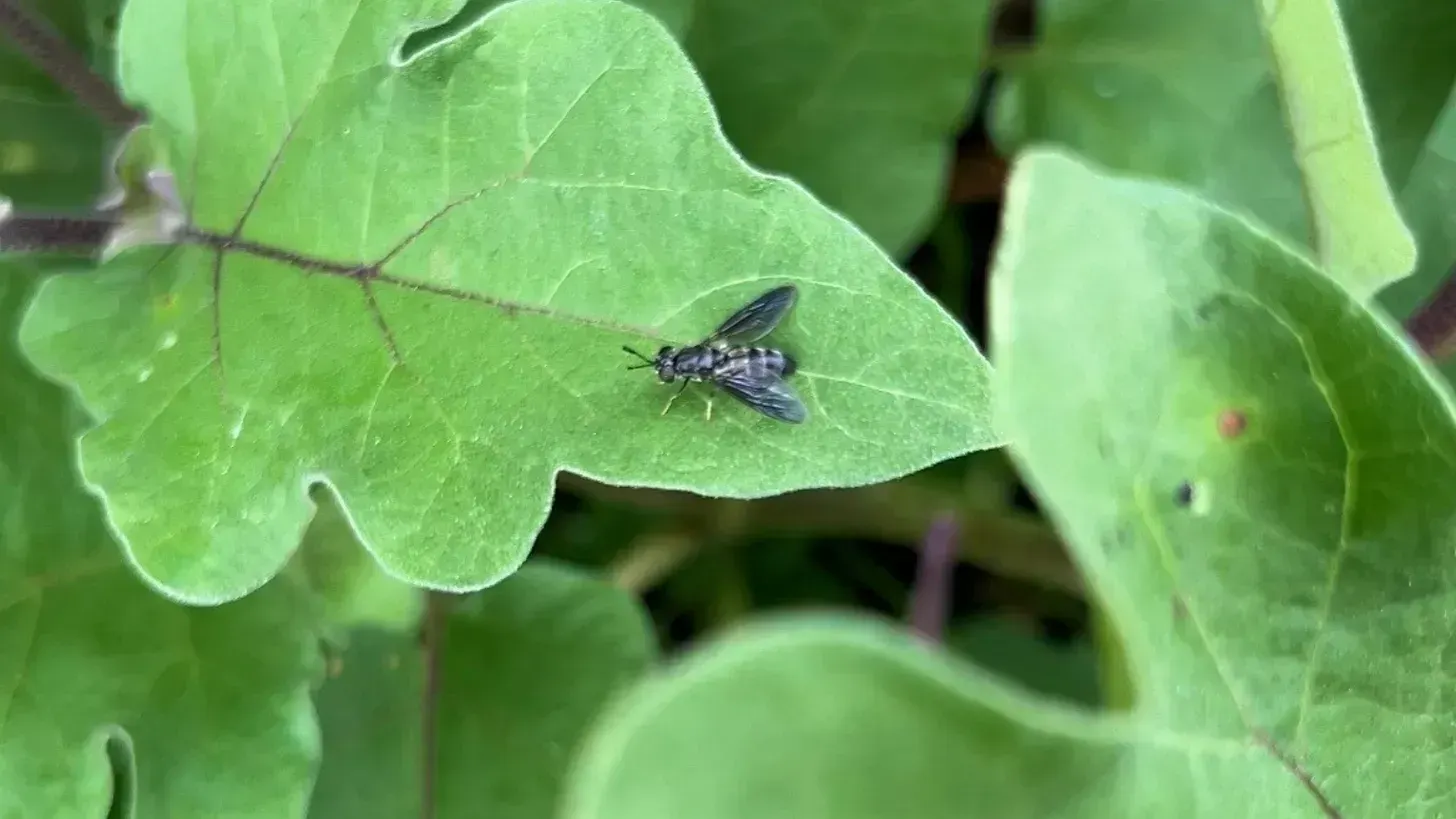
Black Soldier Fly
We sat down with Fredric after the event to hear the whole story. Where it started, what is happening in the soil, what they learned during the ten weeks with us, and where they are going next.
Read on.
Two people, two very different starting points
Fredric calls himself an aviation geek turned climate founder. The turn came after time at an orangutan rehabilitation centre in Borneo, where he saw up close what deforestation costs a country and its wildlife. He left McKinsey to work on nature-based solutions and carbon tech.
Carin grew up inside a family business exporting edible bird’s nest, where she built and ran industrial-scale factory operations. What turned that operational skill into a mission was watching child stunting rates in Indonesia. Fix food security from the ground up, quite literally.


Management team of Z Bio
A country paying twice
Indonesia generates more than 15 million tons of organic waste a year, most of it ending up in unmanaged landfills where much of it is burned. At the same time the country imports over 7 million tons of fertilizer and more than 6 million tons of animal feed annually. Money leaves twice, and farmers are left exposed to whatever import prices do next. (Figures from Z Bio, citing SIPSN 2024, BPS and Kementan.)
That is the gap Z Bio is building into. Not a shortage of raw material, but a missing system to make use of it.
“We’re building the local supply chain that removes both problems at once.”
Why biofertilizer, and not protein
This is the part of Z Bio’s story we find most interesting.
In the black soldier fly larvae, what the insects leave behind, their manure and their shed exoskeletons, is usually treated as leftover. Z Bio looked at the leftover and saw the product. The team first heard about its effects from farmers in Kenya and Malaysia, then ran their own trial to see whether the stories held up.

Black Soldier Fly Larvae
“What we saw firsthand convinced us: it suppresses fungal disease severity, the single most prevalent threat to tropical crops.”
What happens underground
The mechanism is elegant. The biofertilizer contains chitin, a natural compound that makes a plant think a fungal attack is coming. The plant responds by switching on its own immune defences before anything has actually happened. At the same time, beneficial microbes flood the soil and crowd out the harmful ones, while the structure of the soil itself opens up so roots and nutrients can move.
“It equips the plant against diseases and rebuilds the soil biology & biodiversity underneath it.”
A plant that defends itself. Soil that comes back to life. Both from waste that would otherwise have been burned.
Early results from the field
Z Bio is running commercial validation with farmer groups across cacao, rice, leafy vegetables, tomatoes and chillies. Cacao gave them their first hard number.
“Our first cacao field trial cut new fungal disease infections by 33% compared to untreated trees.”
Fungal disease in tropical cacao has no reliable conventional fix, which is what makes that figure worth paying attention to, and why the team is now expanding trials across more crops. Their facility in East Bali has been running since May 2025 and processes around four tons of organic input every day.
Ten weeks in the Venture Program
Z Bio came through our Summer Venture Program alongside seven other ventures from different countries. Ten weeks of workshops, mentor sessions, pitch training and, as always, a lot of Miro boards.
“We walked in with momentum but not a clear roadmap. We walked out with real clarity, on direction, on priorities, and critically, on the sequence in which to grow.”
What Fredric took from the other founders in the room was something less tangible. Building in climate means longer timelines and science that has to hold up, and sharing that with seven teams in the same position was its own kind of fuel. As he put it, grit and passion “aren’t optional here; they’re the job.”

Frederic at the summer pitch event in Zurich
What comes next
A second facility comes online before December. Once both sites are profitable, Z Bio has what it has been working towards from the start: evidence that the model travels.
“That’s proof our model is genuinely replicable, not a one-off.”
Alongside that, the team is running larger biofertilizer trials across more crops, building their own data set and converting more conventional farmers into customers.
Our investment will support Z Bio as it builds those new facilities, scales production, sharpens operations and brings the biofertilizer to a wider market. What Fredric valued most in the partnership was not the cheque, but having investors who understand the business and the context well enough to push back on the right decisions.
Throughout the ten weeks, Brainforest’s associate, Catherine Dolt, worked alongside Fredric as his coach. That kind of close, week-by-week support is what turns a good pitch into a clear roadmap, and it does not stop now that the investment is made.

Frederic with Brainforest coach Catherine
Z Bio joins a portfolio of ventures building for forests, soil and biodiversity, and they arrive with something we always look for: a model grounded in what actually works on the ground, and a stubborn belief that it can be repeated across the whole tropical belt.
As a portfolio company, Z Bio also becomes part of our Canopy Pool, our investment vehicle that brings private capital to early-stage nature ventures.
And yes, applications for our next Venture Program are open again (apply here). We will leave the last word to Fredric:
“If you’re building a climate startup and want to move faster with the right people around you, this is the room to be in. Apply.”
Welcome to our forest, Z Bio 🌳!
Would you like to learn more about Z Bio and how you could get involved? Schedule a call with Tommy, our Chief Venture Officer, to learn more.
Want more stories from the Brainforest community?
Explore more on Substack